

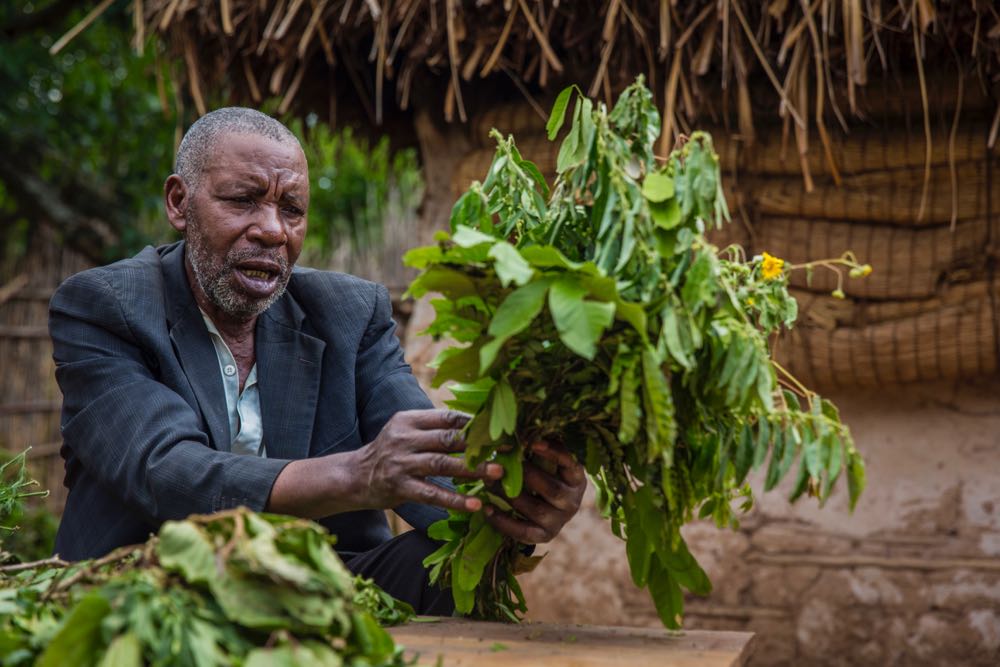
Why they were considered medicine for an “unhappy life” in traditional cultures
In many traditional societies, illness was understood not only as a physical disorder, but also as a sign of a lost order. If a person repeatedly experienced misfortune – physical, emotional, or in their life path – shamans and healers would say something along the lines of:
"You know what I mean."
Not as an accusation, but as an indication that the cause lies deeper than the symptom.
Illness as a sign of separation
From a shamanic perspective, suffering often arises when a person:
- loses contact with oneself
- living against his inner rhythm
- Persistently suppressed emotions
- His role in life is no longer felt.
Misfortune, recurring crises, or inner emptiness were therefore not considered accidents, but rather a signalthat something essential was no longer right.
Teacher plants as medicine in the original sense
Teacher plants were viewed from a medical perspective – though not in today's purely pharmacological sense. "Medicine" meant ( The term "teacher plants" is used here symbolically to describe experiential spaces, not to ascribe an active purpose to plants).
- Restoration of order
- Return to one's own perception
- The memory of that was lost.
These plants were not meant to "repair," but to reveal. They were considered teachers because they showed people:
- Where he abandoned himself
- which emotions were not experienced
- where fear or conformity control life
"You know" – what shamans meant by that
When shamans said "you know", they meant:
- The truth is not unknown.
- It is only covered up
- Humans have long sensed them, but they don't listen to them.
Teacher plants were used tomake this inner truth accessible again – not through teaching, but through experience.
Medicine for consciousness, not just for the body
Teacher plants work on several levels simultaneously:
- physical (regulation, relaxation, activation)
- emotional (access to feelings)
- mental (new perspectives)
- social (connection to community and responsibility)
Therefore, they were never used in isolation, but embedded in:
- Rituals
- Discussions
- Times of silence
- Phases of integration
Without this context, their effect was considered incomplete.
Misfortune as a warning, not as a punishment
A key understanding was:
Misfortune is not a punishment, but a guidepost.
If a person repeatedly:
- ends up in false or hurtful relationships
- develops physical complaints or persistent fatigue
- No longer feels genuine joy
- has the feeling of "not being right"
Then this was seen as a sign that the soul would not belong.
Teacher plants helped to perceive this inner voice again – sometimes gently, sometimes clearly, but always with the goal of reconnection.
Why this knowledge is resurfacing today
In modern societies, suffering is often treated quickly but rarely understood. Symptoms are fought, while the causes remain.
- chronic stress
- Loss of meaning
- Separation from nature
- lack of inner orientation
That is why old practices and plants are reappearing in our consciousness today – not as a step backwards, but as a complementto a system that often views humans only functionally.
Important classification
This view replaces:
- no modern medicine
- no therapy
- No personal responsibility
It adds a dimension that has long been neglected:
The inner knowledge of man about his own life.
Conclusion
Teacher plants were understood by shamans and healers as medicine because they not only influenced symptoms, but also meaning, direction, and self-awareness.
When a life became unbalanced, the message was not:
"You are broken."
Rather:
"You already know what's wrong – now you remember."
In this sense, teacher plants were never a means of escape, but rather tools of remembrance– of what a person already knows deep down.